A balcony is no longer just the place to hang your laundry. It's an extension of your living room, your own piece of nature in the city. The current trend? A 'combined balcony'. Instead of choosing only flowers or only a vegetable garden, we are now massively mixing different types of balcony plants. A combination of fragrant herbs, colourful blooms, and homegrown vegetables not only gives your balcony a lush appearance but is also functional. In this article, we explain how to create the perfect mix and why a slatted balcony with the right planters is the ideal spot for this green explosion.
Why mixing is the new standard
In the past, balconies often featured rows of identical geraniums. While colourful, it lacks the dynamism that a mix of balcony plants offers. By combining plants, you create a small-scale ecosystem. Flowers attract pollinators such as bees and butterflies, which in turn help your strawberries or tomatoes grow. Moreover, the different heights, textures, and scents provide a much more interesting view from your couch.
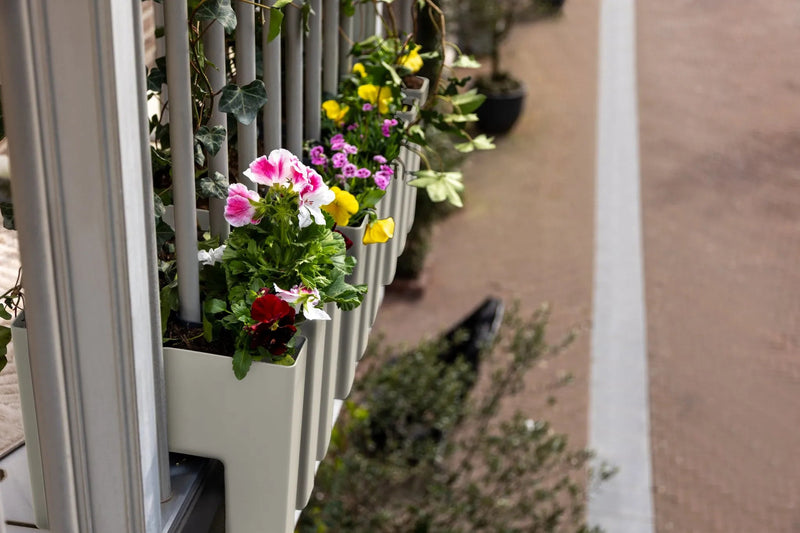
With a slatted balcony, you have the advantage of optimal light from the sides. This is essential for both vegetables and flowers. The challenge is often the floor space. That's why our Vercony planter is so popular for this mix; because the planter extends outwards through the slats, you maintain walking space on your balcony while still being able to accommodate a wide variety of plants.
The ideal base: The Vercony planter on the ground
For a successful mix of balcony plants, you need a stable planter that offers sufficient volume. Vegetables like small bush tomatoes or bell peppers need deeper roots than a simple violet. Traditional hanging baskets are often too shallow and dry out too quickly.
The Vercony planter stands firmly on the ground. This has three major advantages for your plant mix:
- Moisture regulation: A larger planter on the ground retains moisture much more evenly than a hanging basket in the wind.
- Load-bearing capacity: A mix of vegetables and flowers can become heavy. On the ground, you never have to worry about the load on your balcony railing.
- Natural growth: Climbing vegetables or herbs can use the slats as a trellis directly from the planter.
Step 1: Colourful blooms as eye-catchers
Start your mix with a few strong bloomers. These form the visual base of your balcony. For a slatted balcony, hanging bloomers are beautiful because they can cascade through the slats. Consider:
Petunias or Surfinias: These create a huge sea of colour.

Lobelia: For a deep blue accent colour that contrasts beautifully with green herbs.

Nasturtium: A dual-purpose plant! The flowers are beautiful and edible in a salad.

Step 2: Fresh herbs for fragrance and the kitchen
Herbs are the easiest balcony plants to grow. They smell wonderful when you walk past them and often deter unwanted insects. In a mixed planter, the following herbs do exceptionally well:
Rosemary and thyme love a sunny spot and require little water. Place them on the outside of your Vercony planter. Mint is also fantastic, but beware: mint grows very quickly. It's best to bury mint in a small pot inside the large planter to prevent it from overtaking other plants. Chives, with their purple flowers, fit perfectly among ornamental flowers.

Step 3: Compact vegetables for harvesting
You don't need a 20-square-meter vegetable garden to harvest. There are now many types of vegetables specifically bred for pots and planters. For your mix of balcony plants, these are the top picks:
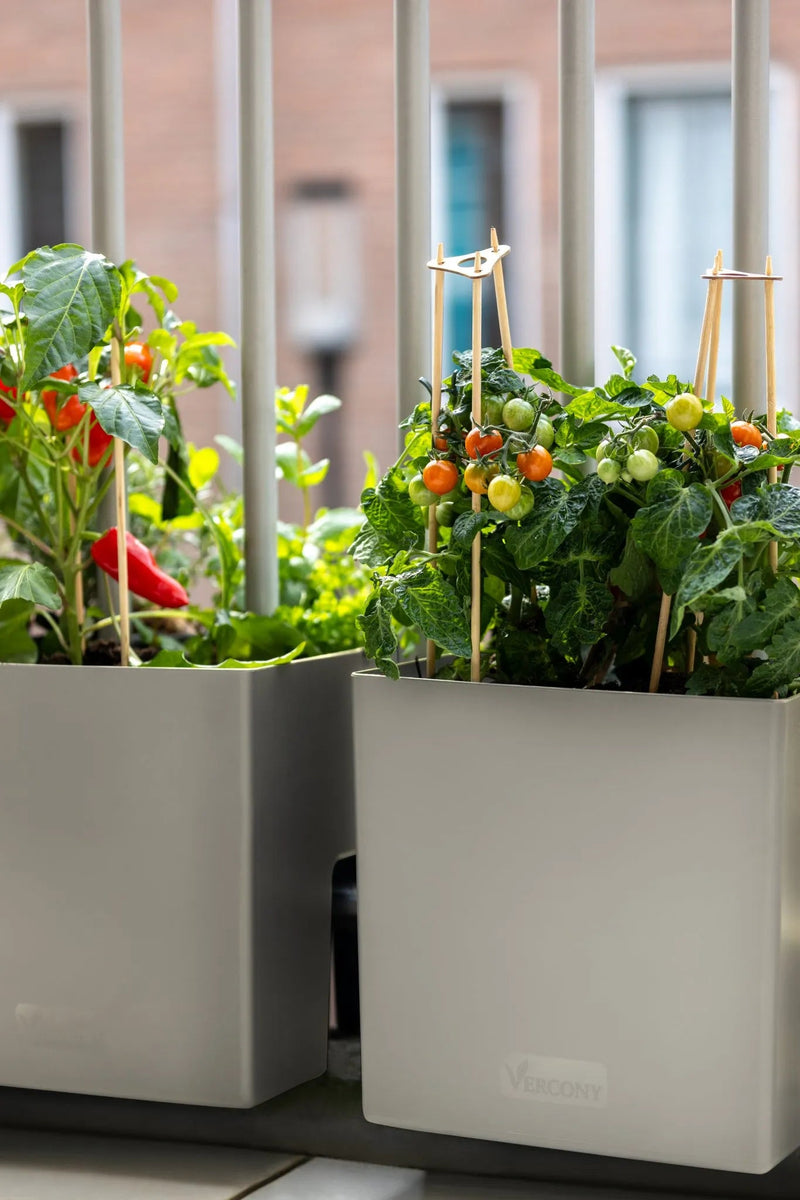
- Snack tomatoes: Choose a bush variety. These won't grow too tall and will be laden with fruit.

- Peppers and bell peppers: These plants have beautiful glossy leaves, and the fruits add a cheerful colour to your planter.
- Cut-and-come-again lettuce: Instead of growing a head of lettuce, you can choose cut-and-come-again lettuce. You simply snip off a few leaves for your lunch, and the plant continues to grow.
How do you arrange the planter?
When arranging your Vercony planter for the balcony, it's wise to consider the growth habit. Place the tallest plants (such as a tomato plant or a tall rosemary branch) in the middle or against the back. Place the lower herbs and flowers at the front, right at the opening that extends through the slats.
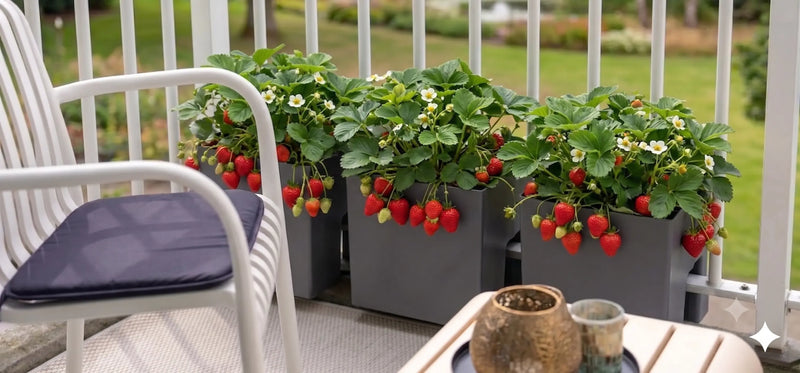
An extra tip: weave the tendrils of nasturtium or a climbing strawberry through the slats. This creates a vertical screen of balcony plants that looks beautiful both from the inside and from the street. This also immediately provides a bit of extra privacy on your balcony.
Caring for your plant mix
Because you're putting different types of plants together, good care is essential. Always use hydro-granules at the bottom of your Vercony balcony planter for drainage. Different plants have different needs, but most herbs and vegetables like