Do you dream of a sunny, atmospheric, and wonderfully fragrant balcony that transports you directly to the south of France? Then lavender on the balcony is one of the best choices you can make. This stylish purple shrub has been one of the most beloved balcony plants for years, and for good reason. With its striking purple flower spikes, silvery-grey leaves, and recognizable, relaxing scent, it immediately brings a summery holiday atmosphere to your outdoor space.
For people living in an apartment or house with a balcony, lavender offers fantastic opportunities. The open railings let in an enormous amount of sunlight, and sun is exactly what this Mediterranean superstar needs to bloom profusely. In this article, we'll tell you everything about the best types of lavender, how to care for the plants, and how to smartly utilize the space on your balcony.
Why lavender on your balcony is a fantastic choice
Lavender is not only a feast for the eyes, but it's also a very practical and useful plant for elevated spaces. While some balcony flowers require a lot of care, lavender is surprisingly strong and self-sufficient.

Here are the main advantages of lavender:
- Wonderful relaxing scent: The essential oils in the flowers and leaves release a delightful, calming scent at the slightest touch. Perfect for unwinding after a long day at work.
- Attraction for butterflies and bees: With lavender, you truly bring life to your outdoor space. Butterflies and buzzing bees love the nectar of the purple flowers.
- Natural mosquito repellent: While we humans enjoy the fresh lavender scent, mosquitoes and flies dislike it. It helps to keep unwanted insects at bay.
- Excellent drought resistance: Lavender originates from dry, rocky areas. If you forget to water it on a hot summer day, it's no problem at all for lavender.
Which lavender do you choose for the balcony?
When you choose lavender for your balcony, you'll encounter different types at the garden center. The two most popular varieties that do very well in pots and containers are:
1. English Lavender (Lavandula angustifolia)
This is the classic, extremely hardy lavender you see frequently in French fields. It has slender, purple flower spikes and a wonderful, refined scent. Moreover, this variety is completely winter hardy in our climate, meaning it remains neatly grey-green even in the colder months.
2. French Lavender or Fringed Lavender (Lavandula stoechas)
You immediately recognize this variety by its striking, funny 'tufts' on top of the flower spikes. French lavender often blooms very early in spring and has a somewhat more resinous scent. It is slightly more sensitive to severe frost but looks incredibly playful and cheerful in a planter.
Smartly furnishing your balcony with lavender
Furnishing a balcony with a balustrade requires smart choices. You certainly don't want the balcony to be cluttered with loose pots that leave no room for your feet. At the same time, lavender needs sufficient soil and good drainage to root properly.
The best approach is to make optimal use of the floor space and possibly combine it with vertical accents.
A rock-solid base on the balcony floor
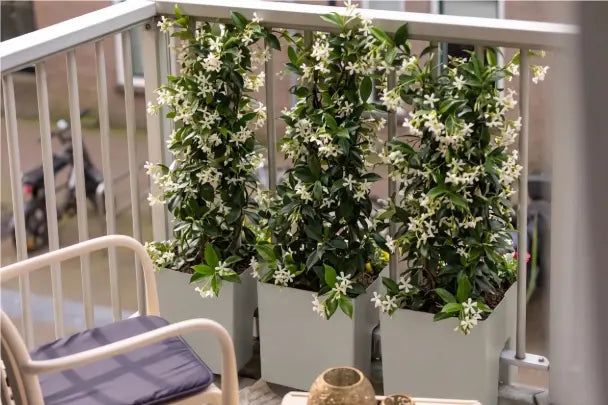
Our unique Vercony planter is the ideal solution for lavender on the balcony. You simply slide this planter through the balustrade rails onto the balcony floor. Because part of the planter extends beyond the balcony, your outdoor space doesn't lose valuable walking area on the floor. Moreover, the planter is firmly anchored to the ground, so it cannot be blown over by a strong gust of wind at height.
Combine with other pots for a Mediterranean atmosphere
Lavender looks beautiful on its own, but it comes into its own even more beautifully when combined with other plants. The purple color of lavender, for example, pairs wonderfully with the fresh green of rosemary and thyme. You can perfectly combine the Vercony planter on the ground with light hanging pots on the top rail or a few terracotta pots on the side. This way, you create an atmospheric, Mediterranean corner on different levels.
Practical care tips for lush and fragrant lavender
Lavender is an easy plant, but it does have a few very specific requirements when it comes to sun and water. With these care tips, you'll enjoy abundant blooms year after year.
1. Place lavender in the sunniest spot
Lavender is a true sun worshipper. The more hours of direct sunlight the plant receives, the more essential oils it produces and the stronger its fragrance will be. Therefore, choose the sunniest corner of your balcony.
2. Good drainage is crucial
If there's one thing lavender truly cannot stand, it's wet feet. In overly wet soil, the roots quickly rot. Therefore, always use well-draining potting soil and optionally mix in some sand or hydro granules. Our Vercony planter is designed so that excess rainwater and irrigation water can easily drain away, which is ideal for lavender.
3. Pruning for a compact and full shrub
To prevent your lavender from becoming bare and woody at the bottom, pruning is very important. Prune the plant twice a year. The main prune is done in early spring, around April, where you cut back the branches significantly to just above the old wood. The shaping prune is done immediately after flowering at the end of summer, where you only cut off the spent flower stems.
Step-by-step plan: How to plant lavender on the balcony
Do you want to enjoy your own purple paradise this summer? With this clear step-by-step plan, you'll get off to a good start immediately:
- Step 1: Place the Vercony planter in position. Slide the planter firmly onto the balcony floor through the railing.
- Step 2: Ensure airy soil. Fill the planter with quality potting soil and, if necessary, mix in some grit or hydro granules for extra aeration.
- Step 3: Plant the lavender shrubs. Place the plants about 20 to 25 centimeters apart so they can grow full and lush.
- Step 4: Add extra pots. Optionally, hang additional pots on the top rail with matching herbs like thyme or oregano.
- Step 5: Water moderately. After planting, give some water to help the roots settle, but only water again when the soil feels dry.
Bring the Mediterranean summer to your balcony with Vercony
With lavender on the balcony, you choose a timeless, fragrant, and atmospheric addition to your outdoor space. The purple flowers, the soothing scent trail, and the cheerful butterflies transform your balcony into a wonderful place to relax. With Vercony's innovative planter, you immediately create the most sturdy and space-saving base on your balcony floor. Put your favorite lavender in it, enjoy the sunshine, and feel like you're on vacation every day!