A small balcony can sometimes feel like a challenge, especially when you dream of a lush, green outdoor space. Because how do you place plants when every square inch counts? Many people neglect their outdoor space or cram it full of loose pots, leaving hardly any room to sit. Fortunately, a lack of space doesn't have to get in the way of your green fingers. With a few clever choices, you can transform even the smallest concrete slab into an atmospheric mini paradise.
In this article, we share five practical tricks to furnish a small balcony in such a way that you can optimally enjoy lots of greenery, without your balcony feeling cramped or small.
1. Make use of 'lost' space near your railings
On a small balcony, the floor is your most valuable asset. Large, round pots standing in the middle of the balcony take up valuable walking space. The trick is to use the spaces that normally remain unused. Think of the edges directly along the balcony railing.

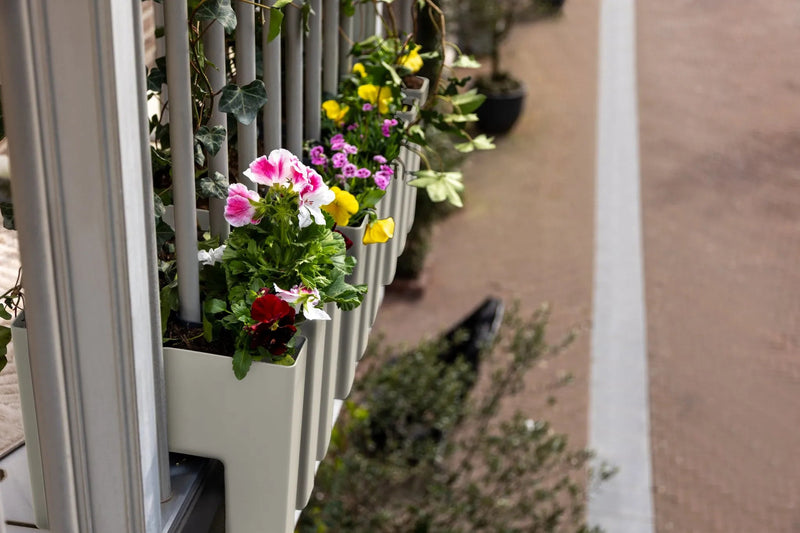
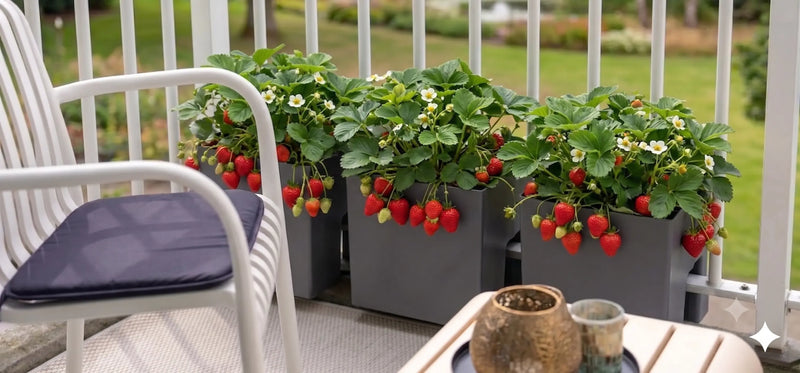
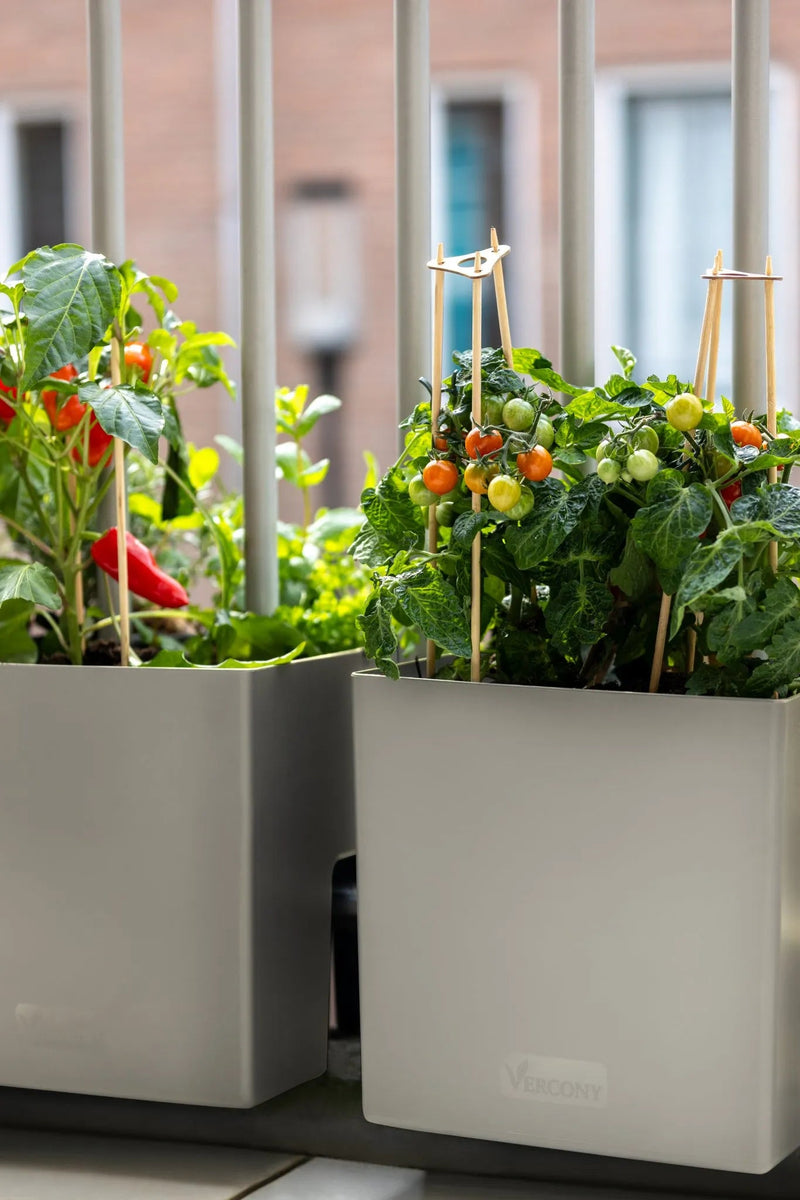
Many balconies have railings. By choosing a planter that is specifically designed to rest partly on the ground through the railings, you effectively move the greenery outwards. This way, you make optimal use of the edge of your balcony and keep the inner space completely free for a nice seating area or a small table. Moreover, greenery placed directly near the railings immediately provides a natural, subtle screen towards the street.
2. Work upwards with vertical planting
If the floor is limited, the wall is your best friend. Vertical gardening is a fantastic way to add a lot of plants to your small balcony without filling up the surface. You can work upwards in various ways:

- Wall rack or trellis: Attach a wooden or metal rack to a blind wall and let climbing plants such as ivy, Tuscan jasmine, or climbing hydrangeas grow upwards.
- Hanging wall pockets: These are textile pockets that you hang on the wall and fill with small herbs or hanging plants.
- Wall shelves: Mount two or three narrow, weather-resistant shelves one above the other for a playful collection of smaller succulents and pots.
By combining wall decoration with a sleek ground planter near the railings, a layered effect is created that makes your balcony appear optically much larger and deeper.
3. Choose multifunctional and foldable furniture
Furnishing a small balcony is not just about plants, but also about being able to sit comfortably. The biggest mistake many people make is buying overly heavy or bulky garden furniture. A robust lounge sofa immediately takes over the entire space, making the balcony feel cramped.
Instead, opt for smart, lightweight furniture that adapts to your needs. Think of a folding table that you can hang on the balustrade or foldable chairs that you can easily store away when you need more space. Benches with built-in storage space are also ideal. Here you can store potting soil, the watering can, and gardening tools, so the balcony always looks tidy and neat.
4. Combine smart planters for a playful effect
While calm is important in a small space, a monotonous arrangement can become boring. The way to make your balcony lively is by cleverly combining different types of planters and heights. A sleek, elongated planter on the ground forms the perfect, stable base. Because it stands flush against the edge, it gives a tidy feeling.

From this base, you can vary. For example, hang a few lightweight railing planters at the top of your balustrade or place a few hanging pots at different heights from the ceiling of the balcony above. This creates a dynamic 'oasis' effect, where the eye is drawn from bottom to top. This immediately makes your balcony seem much higher and more spacious.
5. Select the right plants for the best result
Not every plant is suitable for a small balcony. Large, wide-spreading shrubs can quickly block the passage. When buying plants, therefore, pay attention to their growth habit.
Good choices for a compact balcony are:
- Narrow upright plants: Ornamental grasses like Fountain Grass or Feather Grass grow nicely straight up and take up little width.
- Climbing and hanging plants: Plants like Clematis or hanging Geraniums provide a lot of color and greenery with a minimal pot size.
- Compact herbs: Rosemary, thyme, and mint not only look nice but also smell wonderful and can be used directly in the kitchen.
Also, pay close attention to the orientation of your balcony. A south-facing balcony requires sun-worshipping plants that can tolerate drought well, while a shady north-facing balcony will thrive with ferns and fuchsias.
Frequently asked questions
1. How do I make a small balcony appear larger?
You make a small balcony appear larger by keeping the floor as clear as possible and utilizing vertical space. Use slender furniture on legs, place elongated planters flush against the edges, and work with vertical planting on the walls. This draws the eye upwards and creates depth.
2. What is the best planter for a small balcony?
The best choice is a sleek, elongated planter specifically designed to rest on the ground through the railings. This way, you utilize the space between and outside the railings, keep your walking area free, and the planter is extremely stable without needing to drill.
3. Can I furnish a small balcony if it's very windy?
Yes, but on a windy balcony, choose low, sturdy plants and heavier ground planters. Avoid very tall, top-heavy pots and ensure that hanging elements are always securely fastened to the wall or railing.
4. How many plants can I fit on a small balcony?
That depends on how cleverly you utilize the space. By working with a combination of one or two smart ground planters along the railing, a few wall pots, and hanging plants, you can easily fit dozens of plants without the balcony feeling cluttered.
5. How do I keep a small balcony tidy?
Use multifunctional furniture with storage space, such as a bench with a lid. Store items like potting soil, watering cans, and gardening tools out of sight. A tidy balcony immediately looks calmer and larger.