Do you dream of a balcony full of colorful flowers all summer long? Then petunias on the balcony are the perfect choice. These popular summer bloomers are known for their trumpet-shaped flowers, exuberant flowering, and countless colors. Whether you prefer romantic pink, deep purple, radiant white, or cheerful two-toned patterns, petunias transform any outdoor space into a cozy paradise.
In this article, you'll discover how to best plant, care for, and combine petunias on your balcony. We'll also explain how to make optimal use of your balcony space with our smart Vercony planter.
Why petunias are perfect for your balcony
Petunias are among Europe's most beloved balcony plants. That's not surprising, as they offer many advantages for those who want a cheerful outdoor space:
- Long-lasting bloom: From May until the first frost in autumn, they tirelessly produce new buds.
- Huge variety: They come in almost every imaginable color, from pastels to bright hues and even striped varieties.
- Beautiful trailing growth habit: Many petunia varieties form long, supple stems that hang beautifully over the edge of a planter.
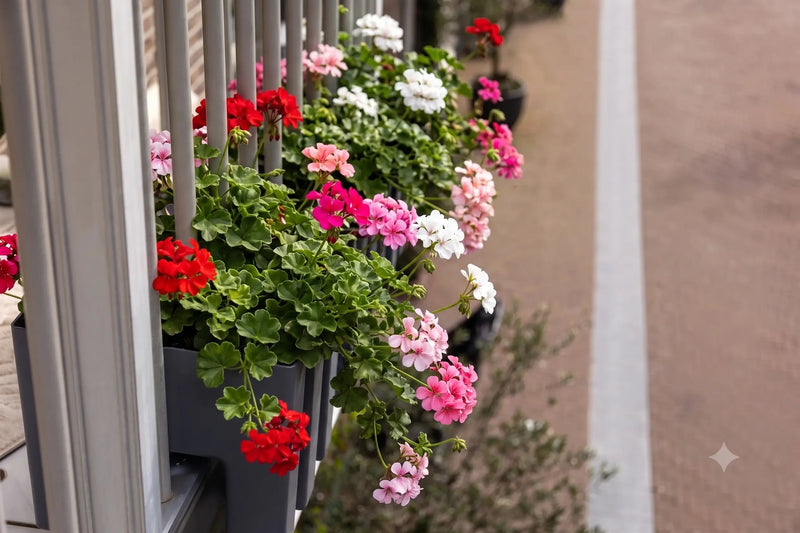
If you have a balcony with railings, hanging petunias will look especially beautiful. The cheerful flowers grow through and over the railing, creating a playful effect and immediately giving a summery feel.

The ideal spot: how much sun do petunias need on the balcony?
Petunias are true sun worshippers. The more sunlight they catch, the more flower buds they produce. A spot on a south, east, or west-facing balcony is therefore ideal. In a sunny spot, you'll enjoy the fullest sea of flowers monthly.
Is your balcony more shaded? Petunias will survive in a spot with partial shade, but they will bloom less profusely and produce longer, thinner stems. In shadier spots, preferably choose lighter flower colors like white or light yellow, as these stand out beautifully even in the dark.
The Vercony planter on the floor: the smart base for a balcony
Many people with a balcony wonder how best to arrange plants. Traditional, round pots often get in the way in the middle of the floor, while ordinary hanging baskets on the balustrade can sometimes dangerously sway or take up valuable space.
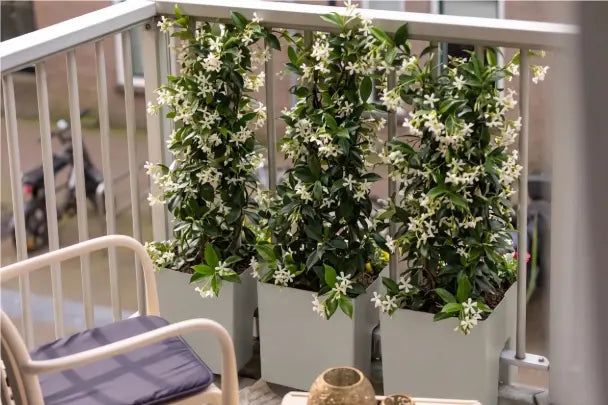
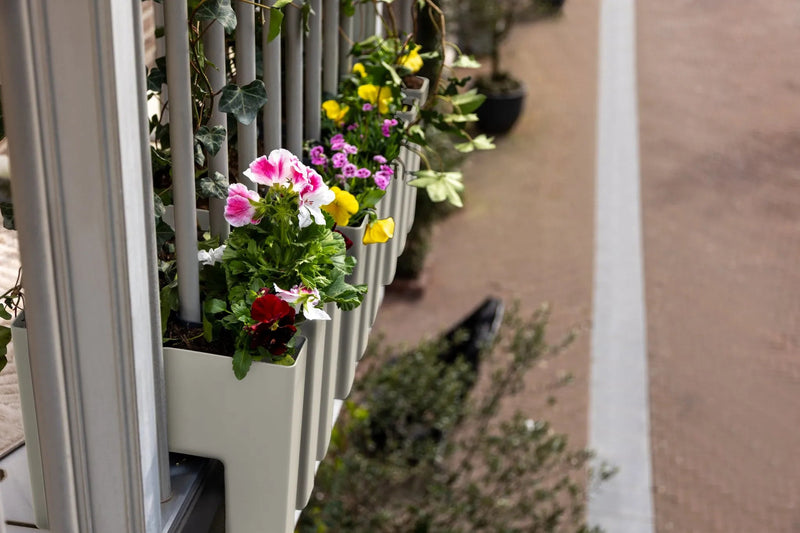
The Vercony planter offers the perfect solution for this. This sleek planter stands firmly on the balcony floor and extends outwards through the railings. This leaves the center of your balcony completely free for walking or sitting. The petunias grow beautifully upwards from the floor-standing planter and drape gracefully through the railings. This creates a lush, green, and blooming view from the street side and from your own seating area.
Step-by-step plan: planting petunias in the planter
Good preparation lays the foundation for a summer of blooming pleasure. Follow these simple steps when planting:
- 1. Choose good potting soil: Use slightly moist, nutritious potting soil suitable for patio and balcony plants.
- 2. Ensure drainage: Make sure excess rain or watering water can drain well from the bottom of the planter, as petunias do not like soggy roots.
- 3. Provide sufficient space: Do not plant petunias too close together. Keep about 15 to 20 centimeters distance between the plants so they can grow full and lush.
- 4. Combine smartly: Optionally, supplement the Vercony floor planter with attractive hanging pots on the wall for a playful height difference.
Petunia care: water, nutrition, and pruning
Petunias are generally easy plants, but because they produce so many flowers, they do require some attention. With these care tips, they will stay in top condition:
Watering: On hot summer days, petunias evaporate a lot of moisture through their thin leaves. On hot days, preferably water early in the morning or later in the evening. Water directly onto the potting soil and not on the delicate flowers.
Plant nutrition: Due to their rapid growth and continuous bud production, petunias are very hungry. From June onwards, add a splash of liquid plant food to the watering can every week.
Removing spent flowers: This is the secret recipe for long-lasting blooms. Regularly snip or pluck away old, withered flowers, including the small green stem beneath them. This prevents the plant from producing seeds and stimulates the creation of fresh flower buds.