Do you dream of delicious, fresh herbs at your fingertips, but only have a balcony at your disposal? No problem at all! Growing herbs on the balcony is surprisingly easy, super fun to do, and incredibly tasty. Whether you like a few sprigs of fresh mint for your tea, fragrant basil for pasta, or rosemary for a savory dish, with your own mini herb garden you transform your outdoor space into a green and flavorful oasis. In this guide, you'll discover everything about choosing the right herbs, smart care tips, and how to optimally furnish your balcony for a rich herb harvest.
Why Growing Herbs on the Balcony Is a Great Idea
Herbs are by far the most rewarding plants for a balcony. They don't take up much space, grow very quickly, and release a wonderful scent even in small quantities. Moreover, a balcony often offers a lovely sheltered spot where sunlight lingers well and strong winds have less impact.

In addition, you save a lot at the supermarket. Loose herb plants or packaged sprigs in the store dry out quickly and are relatively expensive. By growing your own herbs on the balcony, you simply cut exactly what you need for your meal. The remaining plant continues to grow happily, so you can keep harvesting throughout the season.
The Best Herbs for the Balcony
Not all herbs have the same needs when it comes to sunlight and water. To give your herb garden a flying start, it's useful to distinguish between two main groups of herbs:
- Mediterranean Herbs (Sun Lovers): Herbs such as thyme, rosemary, oregano, sage, and lavender love a sunny, dry spot. They need little water and thrive in full sun on a south-facing balcony.
- Kitchen Herbs for Light Shade: Varieties such as parsley, chives, celery, mint, dill, and coriander prefer a bit more moisture and a light spot with partial shade. An east or west-facing balcony is fantastic for these herbs.
The Ideal Location: Sun and Shelter
Carefully assess the orientation of your balcony before buying plants. A south-facing balcony gets a lot of sun, which is ideal for Mediterranean herbs. Is your balcony facing north or east? Then opt for shade-loving or partial-shade herbs such as mint and parsley.
Also, make sure the balcony planters can aerate well. Herbs don't like a stuffy spot, but a cold wind can damage delicate leaves. A lightly sheltered spot against the wall or balcony railing is usually the best choice.
Smart Space Utilization on the Balcony
On a balcony, the available area is naturally limited. After all, you want to keep space for a comfortable chair or a small table. The trick is to arrange your balcony space smartly and efficiently.
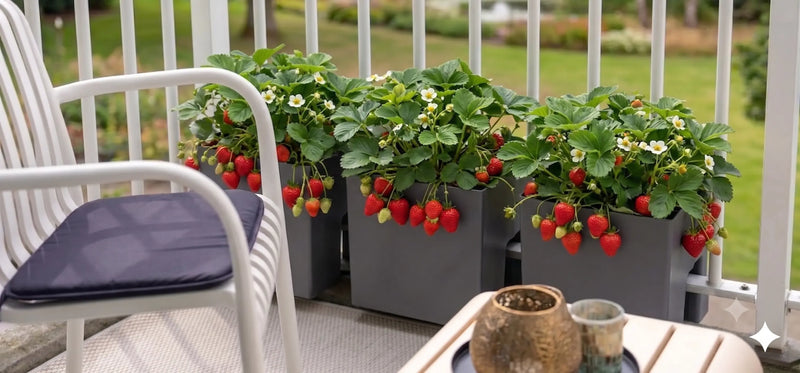
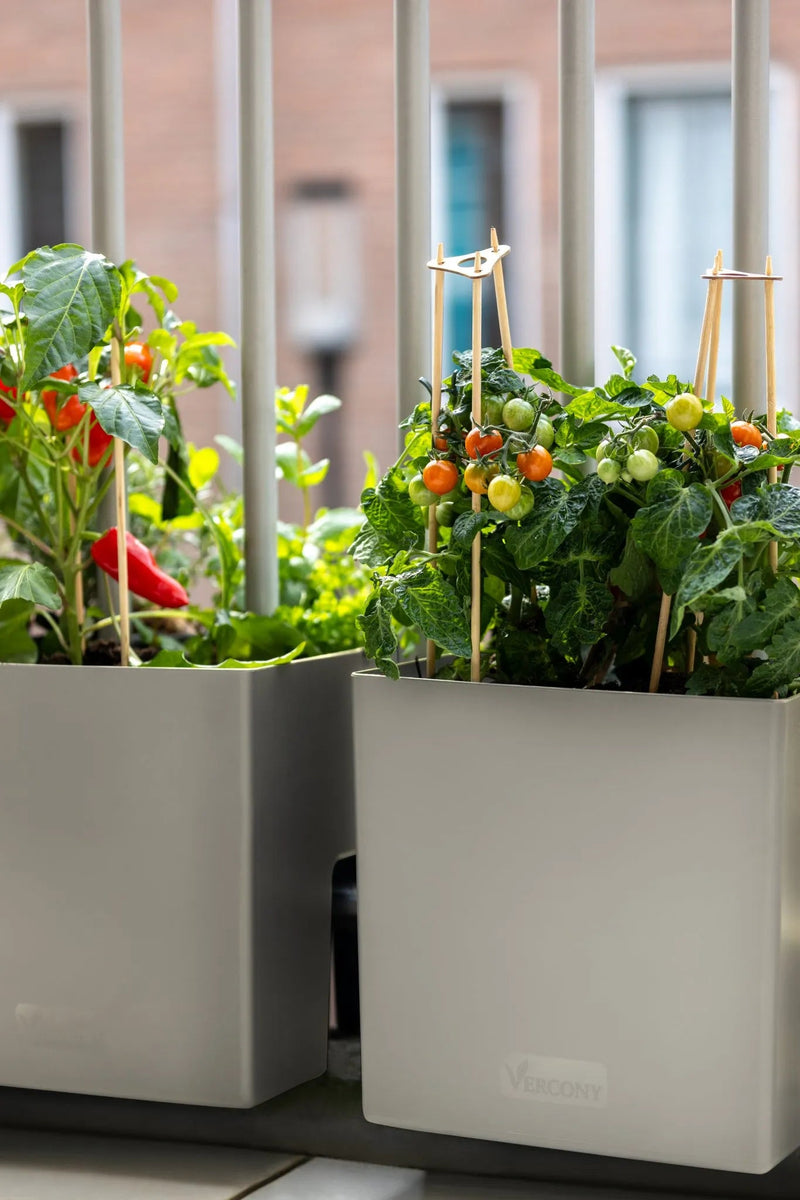
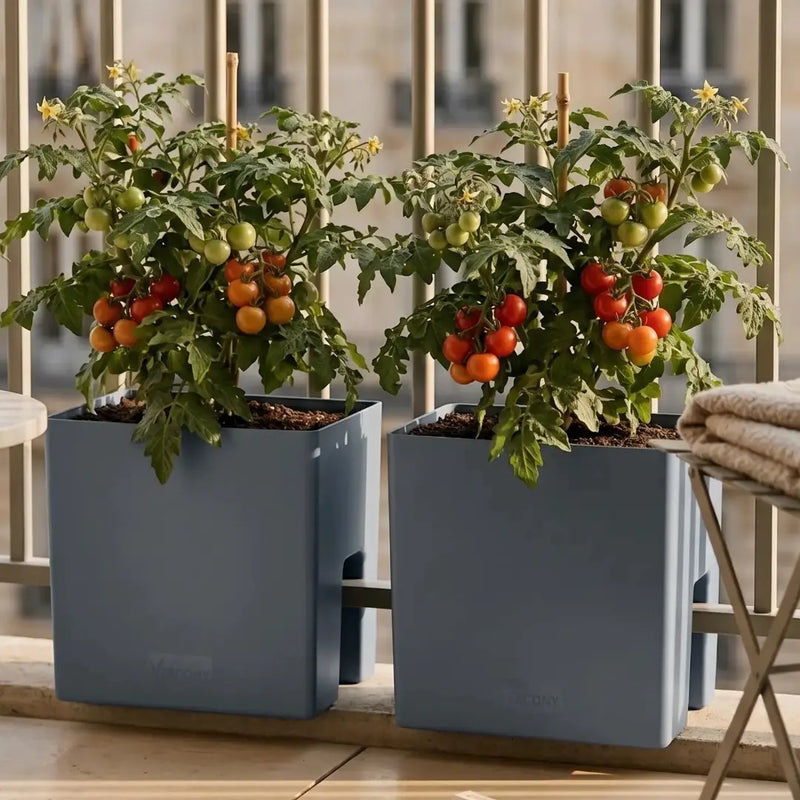
Herbs need a healthy root system and good nutrition. Very small pots dry out very quickly on sunny days, causing your plants to wilt quickly. Our specific Vercony planter offers the perfect solution for this. You can easily place this robust planter on the floor of your balcony, with the legs extending tightly through the railing bars. This securely anchors the planter, allowing you to optimally utilize the edge of your balcony and avoid losing valuable items or walking space.
Would you like even more variety? You can perfectly combine this sturdy Vercony base split with loose pots at different heights, or a vertical plant rack against the wall. This way, you create a playful, layered herb paradise where every inch is smartly used.
Step-by-Step Plan: How to Successfully Grow Your Own Herbs
Step 1: Choosing Between Sowing or Buying Plants
In early spring, you can start sowing herbs indoors in small seed trays. Do you have less patience or want to see results immediately? Then buy compact, organic herb plants from a local garden center. This instantly creates atmosphere and a quick harvest.
Step 2: Planting in Good Potting Soil
Always use airy, high-quality potting soil for your herbs, preferably special herb potting soil. For Mediterranean herbs, you can mix some sand into the soil for extra drainage. Make sure there are always drainage holes at the bottom of your planter, as wet feet are the biggest enemy of herb roots.
Step 3: The Right Watering Policy
Give herbs a generous amount of water occasionally rather than a very small amount every day. Check the soil with your finger. If the top layer feels dry, it's time for water. Water directly onto the soil near the roots and preferably not over the leaves.
Step 4: Always Plant Mint Separately!
Mint is a delicious herb for fresh tea, but be aware: it's a huge spreader. If you put mint in the same pot with other herbs, it will take over the entire pot in no time. Therefore, always plant mint in its own, separate pot.
Step 5: Regular Harvesting and PruningThe more you pick, the more beautifully the plant grows! Regularly snip off the tips of the stems. This encourages the plant to regrow and branch out more widely, resulting in a fuller and healthier herb plant.